24/7 Emergency Water Removal & Cleanup in Hubbard
24/7 emergency water removal and cleanup in Hubbard, OH. IICRC-certified, insurance billing accepted. Call (724) 981-1441.
Our IICRC-certified technicians are dispatched from our Youngstown, OH headquarters and are typically on-site in Hubbard within 60 minutes of your call.
Hubbard sits in Trumbull County where the freeze-thaw cycle hits hard every winter, and when a pipe lets go or a sump pump fails at 2 a.m., standing water spreads faster than most homeowners expect. DISS Restoration responds to emergency water removal and cleanup calls in Hubbard around the clock, bringing IICRC-certified crews and professional drying equipment to stop the damage before it compounds into a mold or structural problem.
Why Hubbard Properties See Water Damage Issues
Trumbull County’s clay-heavy soil drains poorly, which means groundwater pressure against basement walls builds quickly during spring thaw and heavy rain events. Hubbard’s housing stock leans heavily on mid-century construction, and homes built in the 1950s through 1970s frequently have original cast-iron drain lines that corrode from the inside out, failing without obvious warning. Sump basins in those older homes were often undersized for the loads modern storm events create. When the sump can’t keep pace, water moves across the floor slab and wicks into block foundation walls before anyone notices the pump is struggling. That combination of soil pressure, aging infrastructure, and below-grade living space makes basement flooding one of the most common calls in this part of Ohio.
Our Emergency Water Removal & Cleanup Process in Hubbard
When a crew arrives, the first step is locating the source and stopping active water entry if it’s still flowing. From there, the work moves in a specific order because skipping steps creates bigger problems later.
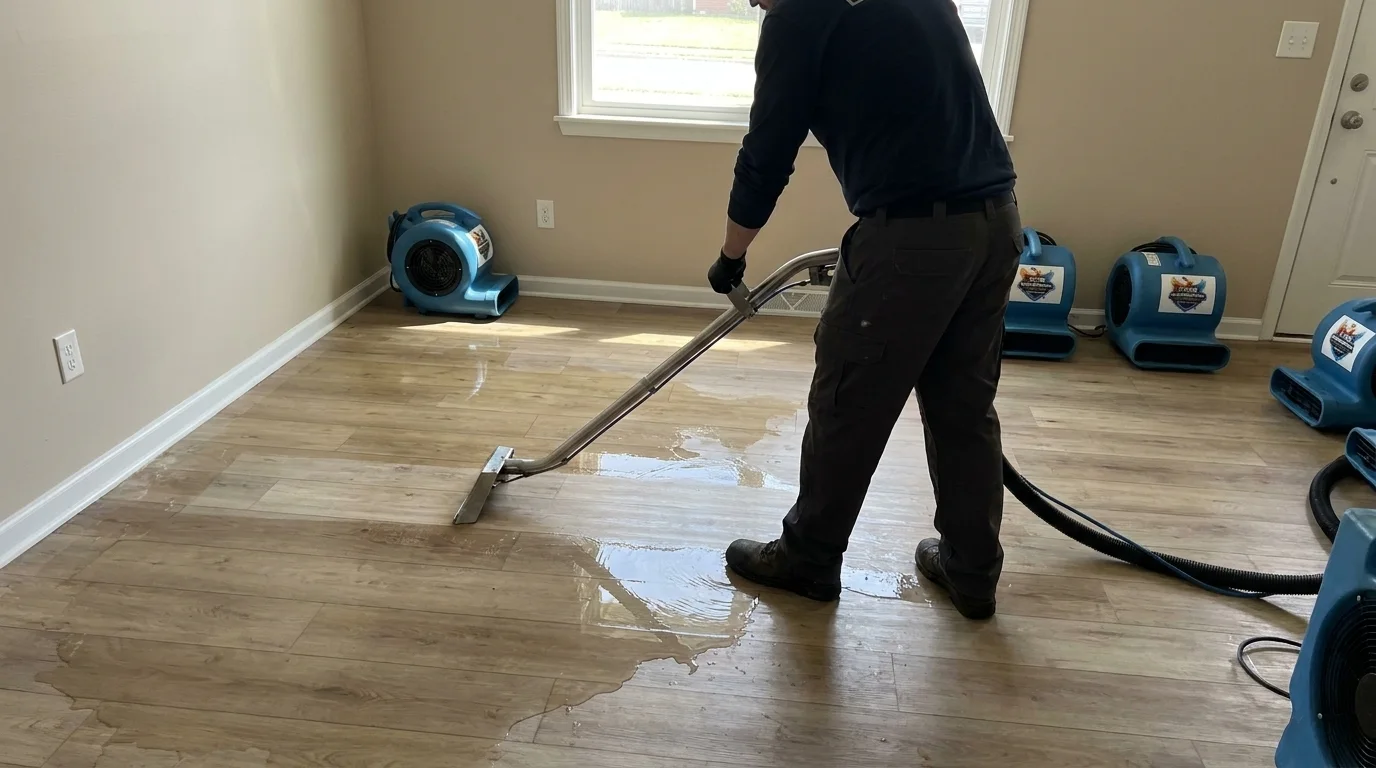
- Standing water extraction: Truck-mounted or portable extraction units pull bulk water from floors, carpet, and low-lying cavities. Getting water out fast limits how far it migrates into subfloor material.
- Moisture mapping: Thermal imaging and calibrated moisture meters map the full extent of saturation. Water behind plaster or inside block walls can read dry at the surface while the substrate stays wet, so readings guide placement of every piece of drying equipment.
- Structural drying: Industrial air movers and refrigerant or desiccant dehumidifiers run in a calculated configuration based on the IICRC S500 standard. Drying logs are recorded daily so progress is documented for your insurance carrier.
- Material assessment: Saturated drywall, insulation, and flooring that cannot be dried in place are removed to prevent mold colonization. Mold can begin to establish within 24 to 48 hours of a water event, which is why the timeline matters.
- Clearance readings: Drying is not complete until moisture levels return to baseline for the material type. The crew does not pull equipment early.
Reaching Hubbard from Youngstown
DISS Restoration is based in Youngstown, and Hubbard is a short drive east on Route 62, putting the city well within the team’s primary service corridor. Because the crew runs 24/7, a call at midnight reaches a live dispatcher, not a voicemail. Route 62 is the most direct path, and the crew is familiar with the grid of streets throughout the city, which matters when every minute of active water spread counts.
Hubbard Insurance Coordination
Most homeowner policies cover sudden and accidental water damage, though coverage for gradual seepage or maintenance-related failures varies by carrier. DISS Restoration documents the loss from the moment the crew arrives: photographs of source, affected materials, moisture readings, and equipment placement logs. That documentation package is what carriers need to process a claim, and providing it directly reduces back-and-forth delays. The crew can also communicate with your adjuster during the drying period so you are not translating technical information between two parties.
Local Note
Hubbard’s older homes frequently have plaster-and-lath wall construction rather than modern drywall, and that distinction changes the drying timeline in a meaningful way. Plaster is dense and holds moisture longer than gypsum board, and the wood lath behind it can stay saturated even after the plaster face feels dry to the touch. In those homes, drying equipment typically needs to run longer, and readings need to be taken deeper into the wall assembly before the structure is cleared. Knowing this going in prevents a situation where equipment is removed too early and moisture left in the lath creates a secondary mold problem weeks later.
If you are dealing with standing water or soaked materials in Hubbard right now, call DISS Restoration at (724) 981-1441. The line is answered 24 hours a day, and a certified crew can be dispatched to your address in Hubbard to begin extraction and assessment.
Serving Hubbard from our Youngstown headquarters — ★ 4.7 · 63 Google reviews
“This restoration company was able to take our weather related water intrusion job from start to finish within a very reasonable timeframe. The people we worked with communicated their next steps and asked questions when needed. The construction manager was always super quick to respond to my…” — Debbie, September 2026Read our reviews on Google →
Emergency Water Removal & Cleanup in Hubbard: Service Coverage
Frequently Asked Questions
How fast can you arrive for emergency water removal & cleanup in Hubbard?
How quickly can DISS Restoration reach a Hubbard address after I call?
Hubbard has a lot of older homes with block foundations. Does that change how water extraction works?
My basement in Hubbard flooded after a heavy rain. Will my homeowner's insurance cover emergency water removal and cleanup?
How long does structural drying take in a Trumbull County home after a water event?
Can DISS Restoration handle both the water removal and cleanup and any mold that develops afterward in a Hubbard home?
Emergency Water Removal & Cleanup response in Hubbard
Most Hubbard calls see a technician on-site within 60 minutes from our Youngstown headquarters.