Carpet Cleaning in Youngstown
24/7 carpet cleaning in Youngstown and surrounding areas. IICRC-certified, insurance billing accepted. Call (724) 981-1441.
Carpet fibers trap what your vacuum can’t reach, pet dander ground into the backing, cooking grease carried by foot traffic from the kitchen, or the slow bloom of mildew that starts when a slow leak goes unnoticed under a pad. By the time a stain is visible or an odor is obvious, the contamination is usually deeper than the surface. Professional carpet cleaning addresses what’s actually in the fiber, the pile, and the pad, not just what shows under normal light.
What carpet cleaning actually involves
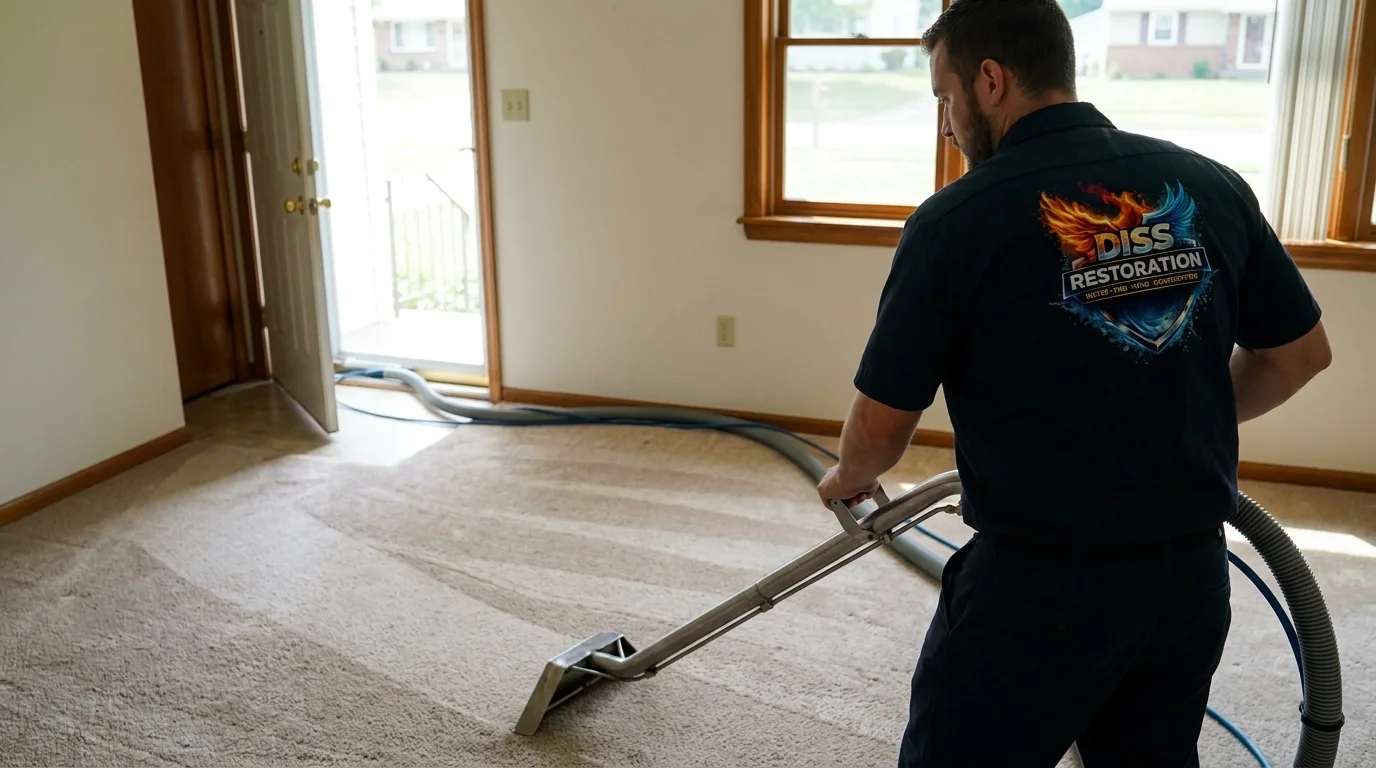
Hot-water extraction, often called steam cleaning, is the industry standard for deep carpet cleaning, and for good reason. Water heated to a high temperature is injected into the carpet pile under pressure, then immediately vacuumed out along with suspended soil, allergens, and residue. Done correctly, the process pulls contaminants from the base of the fiber rather than redistributing them.
Equipment matters here more than most homeowners realize. Truck-mounted extraction units generate significantly more heat and suction than portable machines, which translates to cleaner fibers and faster dry times. Slower dry times aren’t just inconvenient, carpet that stays damp for more than 24 to 48 hours can develop microbial growth in the pad even when the surface feels dry.
For commercial carpet cleaning in offices, rental properties, or medical facilities, the process also accounts for traffic-lane soiling patterns, commercial-grade fiber types, and the need to return spaces to use quickly. Dwell time, agitation method, and rinse chemistry all shift depending on what the carpet is made of and how it’s been used.
Our process
-
Pre-inspection and fiber identification. Before any water or chemistry touches the carpet, we identify the fiber type (nylon, polyester, wool, olefin), construction, and existing damage. Wool and natural fibers respond differently to pH than synthetics, and skipping this step is how colors bleed and backings delaminate.
-
Pre-treatment and dwell time. Traffic lanes, pet areas, and visible stains receive targeted pre-spray, enzyme-based solutions for organic soils, alkaline degreasers for oil-based buildup. The chemistry needs time to break the bond between the soil and the fiber before extraction begins. Rushing this step is the most common reason stains reappear after cleaning.
-
Hot-water extraction. Truck-mounted equipment delivers pressurized hot water into the pile while simultaneous vacuum extraction removes the suspended soil. Wand speed and overlap pattern are controlled to ensure consistent coverage without over-wetting any section.
-
Carpet stain removal, targeted treatment. After the primary extraction pass, remaining spots are addressed individually. Tannin stains (coffee, tea, red wine), protein stains (blood, food), and dye stains each respond to different chemistry. Attempting to treat all stains the same way is how permanent damage happens.
-
Post-cleaning grooming and dry-time management. Pile is groomed in a consistent direction to promote even drying and restore texture. Air movers are positioned as needed to bring dry time down, particularly in Youngstown’s humid summers when ambient moisture slows evaporation. We document the condition of the carpet before and after, useful if the cleaning is part of an insurance claim.
What separates a good carpet cleaning response from a bad one
The most common failure point is over-wetting. When too much water is applied or extraction suction is insufficient, moisture saturates the backing and pad. The carpet surface can feel nearly dry within hours while the pad underneath stays wet for days, long enough for mold spores to colonize. This is particularly common with portable rental machines, which lack the vacuum lift of truck-mounted units.
A second common problem is residue left behind by low-rinse methods. Some cleaning solutions, if not thoroughly extracted, leave a sticky film in the fiber that actually attracts soil faster than before. Carpets cleaned this way look good for a week and then seem to get dirty faster than they did before cleaning.
For insurance-related losses, a pipe burst that soaked a carpeted room, or smoke residue after a kitchen fire, documentation is critical. Adjusters need fiber-type notes, pre-existing damage records, and before/after photos to process a contents or structural claim accurately. Carpet sanitization after a water loss also requires attention to the category of water involved: clean supply-line water is handled differently than gray or black water, where the pad almost always requires replacement rather than cleaning.
As an IICRC Certified Firm with technicians holding IICRC Water Restoration Technician (WRT) credentials, DISS Restoration follows established drying and contamination protocols, which matters when a carpet cleaning is connected to a larger water or fire loss claim.
What does carpet cleaning cost?
Typical costs for professional carpet cleaning vary based on square footage, soil level, fiber type, and whether the work is part of a larger restoration loss. Most homeowners pay in the ranges below for common scenarios, these are industry-typical figures, not quotes.
| Scenario | Typical industry range |
|---|---|
| Single room, lightly soiled | $75 – $150 |
| Whole home (3–4 bedrooms), standard cleaning | $250 – $500 |
| Whole home, heavy soiling or pet odor treatment | $400 – $800 |
| Commercial space (per 1,000 sq ft) | $150 – $400 |
| Carpet cleaning after water loss (Category 1) | $300 – $700+ depending on scope |
| Carpet replacement vs. cleaning assessment | $100 – $250 for documented scope |
Every loss is different, and DISS Restoration provides a written scope before any work begins. Homeowners insurance typically covers carpet cleaning or replacement when the damage results from a covered peril, a burst pipe, storm intrusion, or fire, but routine cleaning for general soiling is a maintenance expense not covered by most policies.
Seasonal and regional considerations
Youngstown’s climate creates specific carpet care timing. Winters bring road salt and sand tracked in from driveways and sidewalks, abrasive particles that work down into the pile and cut fiber over time if not removed before spring. Late spring and summer bring elevated humidity that extends dry times after cleaning; scheduling extraction cleaning on lower-humidity days, or using air movers, reduces the window when damp carpet is vulnerable. Older housing stock in the Mahoning Valley, much of it built in the mid-20th century, often has original pad beneath newer carpet, and that pad can hold years of accumulated moisture damage that only becomes apparent during a thorough cleaning.
Service area
DISS Restoration is based in Youngstown and serves the surrounding Mahoning Valley region, including Boardman, Canfield, Warren, Niles, Austintown, Poland, Struthers, and neighboring communities. Individual city service pages link back here for the full process detail, wherever you are in the area, the same equipment and protocols apply.
Ready to get the contamination out of the fiber, not just off the surface? Call DISS Restoration at (724) 981-1441 to schedule your deep carpet cleaning or carpet stain removal assessment.
Services We Handle
- Carpet & Upholstery Cleaning
Frequently Asked Questions
Does homeowners insurance cover carpet cleaning?
Why do stains come back after carpet cleaning?
How long does carpet take to dry after professional hot-water extraction?
When does carpet need to be replaced rather than cleaned after a water loss?
What's the difference between carpet sanitization and standard carpet cleaning?
Looking for the best carpet cleaning company in Youngstown?
DISS Restoration provides carpet cleaning in Youngstown, OH and the surrounding area, and has served local property owners since 2021. Customers rate us 4.7 out of 5 stars across 63 Google reviews. We answer calls 24/7 — call (724) 981-1441 for immediate help.
Need Carpet Cleaning now?
We respond 24/7 across Youngstown and surrounding OH cities.