
Contents Restoration and Storage in Youngstown
24/7 contents restoration and storage in Youngstown and surrounding areas. IICRC-certified, insurance billing accepted. Call (724) 981-1441.
After a fire, flood, or sewage backup, the structure gets most of the attention, but it’s often your furniture, clothing, documents, and irreplaceable personal items that carry the real emotional weight of a loss. Smoke odor soaks into upholstery within hours. Soot residue etches finished wood surfaces if it sits. Water-saturated fabric grows mold in 24 to 48 hours. Contents restoration is the work of stopping that clock: carefully inventorying, packing out, cleaning, deodorizing, and storing your belongings while the structure behind them is being repaired.
What contents restoration and storage actually involves
Contents work is its own discipline, distinct from structural drying or smoke remediation. It starts with a room-by-room inventory, every item photographed, catalogued, and assigned a condition code before anything is moved. That documentation isn’t just good practice; it’s what your insurance adjuster needs to process a contents claim accurately.
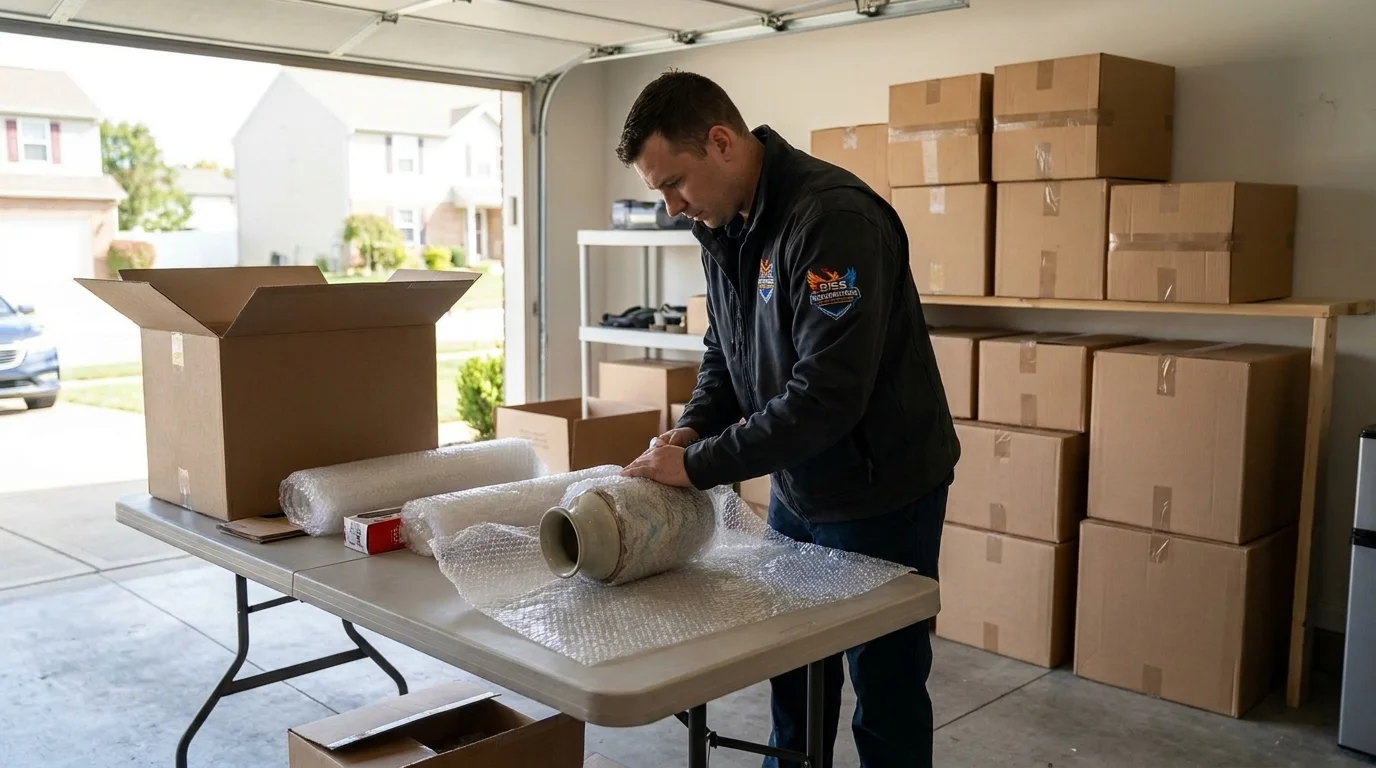
Pack-out follows: items are wrapped, boxed, and transported to a climate-controlled storage facility where they’re protected from secondary damage while the job site is active. Cleaning methods vary by material, ultrasonic tanks for hard goods like ceramics, electronics housings, and metal fixtures; dry-cleaning sponges and chemical sponges for smoke-affected soft goods; ozone chambers or hydroxyl generators for odor treatment; and specialized document drying and freeze-drying protocols for paper, photos, and media.
Timeline depends on the volume and severity of the loss. A single-room pack-out with moderate smoke exposure might take a day to inventory and pack, several days to clean and deodorize, and a week or two in storage while structural work wraps up. Larger losses with heavy soot or water saturation take longer, and rushing that process is how items come back smelling like smoke or carrying residual moisture that causes mold in storage.
Our process
-
Room-by-room inventory and photo documentation. Before a single item is moved, every affected space is photographed and every item is logged with its condition. This inventory becomes the contents claim worksheet, a line-by-line record that supports your insurance settlement and protects you from underpayment on damaged or total-loss items.
-
Condition triage and salvageability assessment. Not everything can be restored, and calling that out honestly upfront saves time and prevents disputes later. Porous materials with Category 3 (sewage or floodwater) contamination, items with deep char damage, or belongings with irreversible odor saturation are flagged as non-salvageable. Everything else is prioritized for cleaning.
-
Careful pack-out and secure transport. Salvageable items are wrapped, boxed by room and category, and transported to a climate-controlled facility. Fragile and high-value items, artwork, electronics, collectibles, are packed and logged separately. The chain of custody is documented throughout.
-
Cleaning, deodorization, and restoration. Hard goods go through ultrasonic cleaning where appropriate, the high-frequency vibration reaches into crevices that hand-cleaning misses. Soft goods are assessed for dry cleaning, ozone treatment, or hydroxyl generation. Wood furniture with smoke or water damage is cleaned, dried, and refinished as needed. Documents and photos with water damage may go through freeze-drying to prevent further deterioration.
-
Storage and coordinated return. Items remain in secure, climate-controlled storage until the structure is ready. Return delivery is coordinated with the reconstruction timeline so your belongings come back to a clean, dry, repaired space, not a job site.
What separates a good contents response from a bad one
The most common failure in contents work is skipping or rushing the inventory. Without a thorough room-by-room photo log taken before pack-out, there’s no baseline for the insurance claim, and homeowners frequently end up undercompensated for items that were damaged or lost in the process. A complete pre-pack inventory protects you.
The second common failure is treating all smoke damage the same. Protein soot from a kitchen fire is nearly invisible but leaves a sticky, foul-smelling film that bonds to surfaces differently than the dry, powdery carbon soot from a structural fire or the wet, oily soot from synthetic materials burning. Using the wrong cleaning chemistry on the wrong soot type can drive residue deeper into upholstery or strip finishes from wood. IICRC FSRT-trained technicians characterize the soot type before selecting a cleaning method.
Insurance adjusters look for itemized condition documentation, cleaning method justification, and a clear chain of custody from pack-out through return. Vague line items, “contents cleaning, lot”, get disputed. Detailed, per-item records with before-and-after photos move through the claims process faster and with fewer supplements.
What does contents restoration and storage cost?
Typical costs for contents restoration and storage depend heavily on the volume of items, the type of loss, and how much cleaning and deodorization each item requires. Most homeowners pay somewhere in the ranges below, these are industry-typical figures, not DISS Restoration quotes, and every loss is different. DISS Restoration provides a written scope of work before any charges are incurred.
| Scenario | Typical industry range |
|---|---|
| Single room, light smoke or water, pack-out and return | $800 – $2,500 |
| Single room, heavy soot or odor, full cleaning and deodorization | $2,000 – $5,000 |
| Whole-home pack-out, moderate loss | $5,000 – $15,000 |
| Whole-home pack-out, severe fire or flood, extended storage | $12,000 – $30,000+ |
| Document and photo recovery (freeze-drying, per box) | $300 – $900 per box |
| Ultrasonic cleaning, hard goods (per load) | $200 – $600 per load |
Homeowners insurance typically covers contents restoration and storage when the loss is caused by a covered peril, fire, smoke, sudden water discharge, or storm damage. Coverage limits and depreciation schedules vary by policy, which is another reason detailed per-item documentation matters from the start.
Seasonal and regional considerations
In the Youngstown area, winters bring freeze-thaw cycles that can cause pipe bursts, often discovered hours or days after the fact, when water has already soaked into flooring, walls, and the contents sitting against them. By the time a pipe-burst loss is called in, upholstered furniture and stored items may already be in the early stages of mold colonization. Speed of pack-out matters more in those situations than in a clean-water loss caught immediately.
Summer humidity in northeast Ohio also affects contents in storage. Items that aren’t held in climate-controlled conditions during warm months can absorb ambient moisture and develop mold or mildew even after being cleaned, which is why the storage environment is as important as the cleaning process itself.
Service area
DISS Restoration is based in Youngstown and provides contents restoration and storage services throughout the greater Youngstown area, including surrounding communities in Mahoning, Trumbull, and Lawrence counties. Individual city-specific service pages link back here for the full process detail.
If your home or property has been affected by fire, water, or any loss that’s displaced your belongings, call (724) 981-1441 to begin the inventory and pack-out process, the sooner contents are documented and removed from a damaged environment, the more can be saved.
Frequently Asked Questions
Does homeowners insurance cover contents restoration and storage?
What is a contents pack-out, and do I actually need one?
How do you clean items that have smoke or soot on them — and does the cleaning actually get the smell out?
Can water-damaged documents, photos, or books be saved?
How is the contents inventory used in my insurance claim, and what happens if something is lost or damaged during pack-out?
Looking for the best contents restoration and storage company in Youngstown?
DISS Restoration provides contents restoration and storage in Youngstown, OH and the surrounding area, and has served local property owners since 2021. Customers rate us 4.7 out of 5 stars across 63 Google reviews. We answer calls 24/7 — call (724) 981-1441 for immediate help.
Need Contents Restoration and Storage now?
We respond 24/7 across Youngstown and surrounding OH cities.
Related Coverage
- Our Restoration Services
- Contact DISS Restoration
- Contents Restoration and Storage in Austintown
- Contents Restoration and Storage in Boardman
- Contents Restoration and Storage in Canfield
- Contents Restoration and Storage in Girard
- Contents Restoration and Storage in Hubbard
- Contents Restoration and Storage in Niles
- Contents Restoration and Storage in Struthers
- Contents Restoration and Storage in Warren