24/7 Emergency Flood Damage Restoration in Youngstown
24/7 emergency flood damage restoration in Youngstown and surrounding areas. IICRC-certified, insurance billing accepted. Call (724) 981-1441.
Flooding in your Youngstown home or business? Standing water from a failed sump pump, overland flooding off the Mahoning River, or a sewer backup during a heavy storm needs to be addressed within hours, not days, before it moves from a cleanup job into a structural one. DISS Restoration answers 24/7 and works on extraction and drying equipment placement the same day we’re called, documenting the loss for your insurance carrier as we go.
What flood damage restoration actually involves
Flood damage restoration is different from a routine water leak because the water source is usually uncontrolled, often contaminated, and frequently affects multiple rooms or an entire lower level at once. The work starts with pumping or extracting standing water, then moves into structural drying: pulling baseboards, drilling weep holes in cabinet toe-kicks, and sometimes removing drywall or flooring that’s absorbed water the equipment can’t reach behind. Depending on how long water sat and what it carried (storm runoff, groundwater, or sewer backflow), the affected materials may fall into Category 2 or Category 3 water under IICRC guidelines, which changes what can be saved versus what has to be removed and disposed of. A typical flood job runs several days of active drying with daily moisture monitoring, not a single visit.
Our process
- Water source and contamination assessment. Before any equipment goes in, we identify whether the water is clean, gray, or black, which determines PPE requirements and what materials are salvageable.
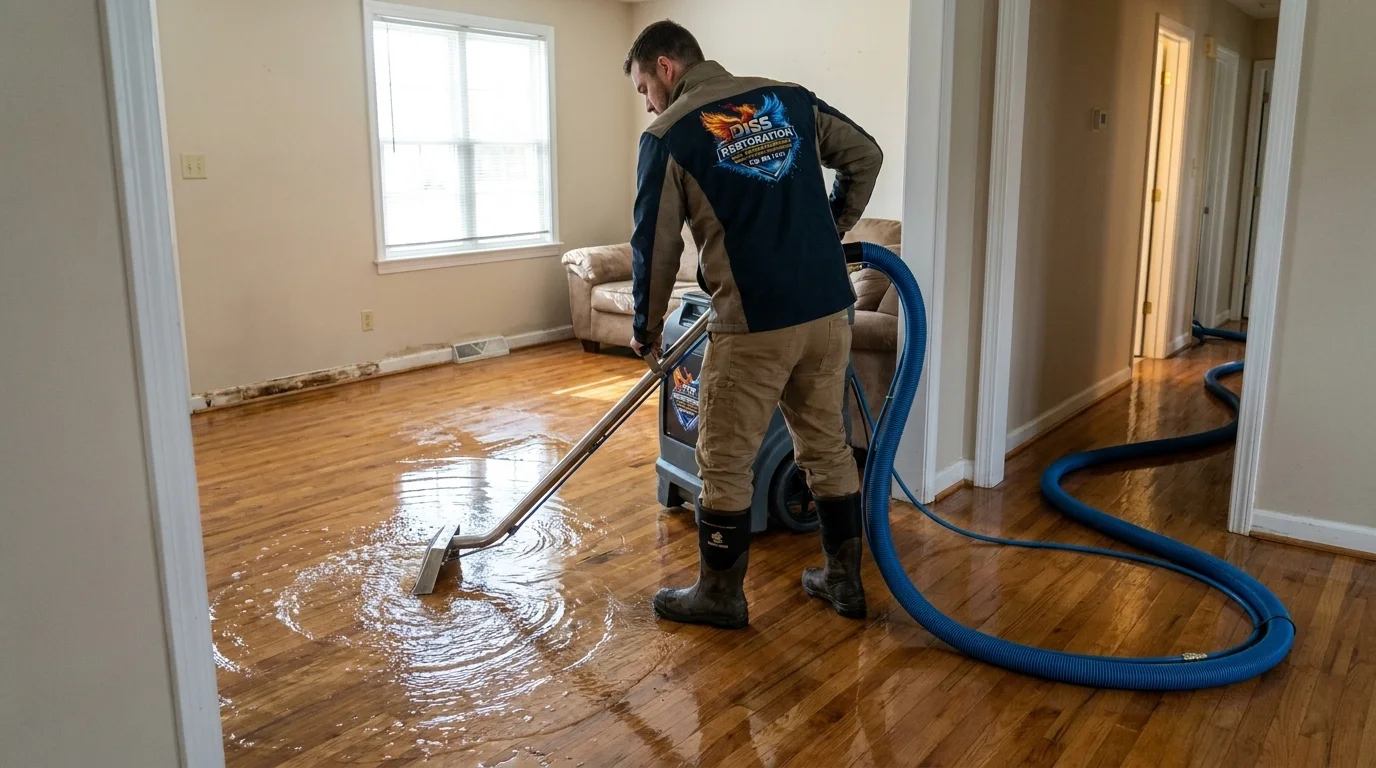
- Extraction. Truck-mounted or portable extraction units remove standing water from flooring, carpet, and pad, and we check subfloor and wall cavities for water that’s migrated beyond the visible flood line.
- Containment and selective demolition. Where water has wicked into drywall, insulation, or subflooring past the point of effective drying, we remove the affected material to stop ongoing moisture and contamination, and to prevent mold colonization, which can begin within 24 to 48 hours in warm, damp conditions.
- Structural drying with daily monitoring. Air movers and dehumidifiers are placed per a drying plan, and we track moisture content in framing, subfloor, and drywall with meters each day until readings return to a dry standard, not just until the surface looks dry.
- Antimicrobial application and documentation. Affected surfaces are treated to inhibit microbial growth, and we compile photos, moisture logs, and equipment run-time records for your insurance file.
What separates a good flood damage response from a bad one
The most common mistake in flood cleanup is drying the surface and stopping too soon, leaving saturated framing or subfloor that reads dry on top but holds moisture underneath, which shows up as mold or soft spots weeks later. Another frequent miss is treating all flood water the same: storm water and sewer backup carry contamination that clean supply-line water doesn’t, and skipping the contamination assessment can mean the wrong materials get “saved” when they should have been removed. Insurance adjusters also look for daily moisture logs and photo documentation at each stage; without that paper trail, disputes over scope and payout are far more common. A thorough response documents the water category, sets drying equipment based on room volume and material type rather than a flat formula, and verifies dryness with instruments before closing out the job.
What does flood damage restoration cost?
Costs vary widely based on how much water intruded, how long it sat before cleanup began, and whether the water was clean or contaminated. Most homeowners pay within a range depending on the scope, and every loss gets a written scope of work from DISS Restoration before any work begins, since no two floods affect a structure the same way. Homeowners insurance typically covers sudden and accidental flooding, such as a burst pipe or failed appliance, but separate flood insurance is usually required for overland or river flooding; we help document the loss regardless of which policy applies.
| Scenario | Typical range |
|---|---|
| Single room, clean water, fast response | $1,200 - $3,500 |
| Basement flood, several hundred square feet | $3,000 - $8,000 |
| Whole-level flood with contaminated water | $7,000 - $15,000 |
| Flood with drywall and flooring removal | $8,000 - $20,000 |
| Large structure, extended standing water | $15,000 - $40,000+ |
Seasonal & regional considerations
Youngstown’s older housing stock, much of it built with basements common to Northeast Ohio construction, means groundwater and sump pump failures are a recurring source of flood calls, especially during spring snowmelt and heavy rain events along the Mahoning River watershed. Freeze-thaw cycles through the winter can also stress foundation walls and footing drains, creating new entry points for water that show up as flooding the following spring. Older sewer infrastructure in parts of the region can also back up during high-volume storms, which is a contamination consideration we factor into the water category assessment.
Service area
DISS Restoration responds to flood damage throughout Youngstown and surrounding Mahoning Valley communities, including Boardman, Austintown, and Warren. Local crews mean less time between your call and equipment on-site, which matters most in the first hours after a flood.
If water is actively rising or has already stopped at the baseboards, call (724) 981-1441 to schedule your flood damage assessment and get extraction equipment moving before the water has time to spread further into your home’s structure.
Services We Handle
- Flooding Damage
Frequently Asked Questions
Does homeowners insurance cover flood damage restoration?
How long does structural drying take after a flood?
What's the difference between Category 2 and Category 3 flood water?
Can flooring and drywall be saved after a flood, or does it all need to be replaced?
What should I do while waiting for a flood restoration crew to arrive?
Why do adjusters ask for daily moisture logs during a flood claim?
Looking for the best flood-damage-restoration company in Youngstown?
DISS Restoration provides flood-damage-restoration in Youngstown, OH and the surrounding area, and has served local property owners since 2021. Customers rate us 4.7 out of 5 stars across 63 Google reviews. We answer calls 24/7 — call (724) 981-1441 for immediate help.
Need flood-damage-restoration now?
We respond 24/7 across Youngstown and surrounding OH cities.
Related Coverage
- Our Restoration Services
- Contact DISS Restoration
- Restoration Services in Austintown
- Restoration Services in Boardman
- Restoration Services in Campbell
- Restoration Services in Canfield
- Restoration Services in Farrell
- Restoration Services in Girard
- Restoration Services in Greenville
- Restoration Services in Grove City
- Restoration Services in Hermitage
- Restoration Services in Hubbard
- Restoration Services in Mercer
- Restoration Services in Mineral Ridge