Odor Removal and Deodorization in Youngstown
24/7 odor removal and deodorization in Youngstown and surrounding areas. IICRC-certified, insurance billing accepted. Call (724) 981-1441.
What Odor Removal and Deodorization actually involves
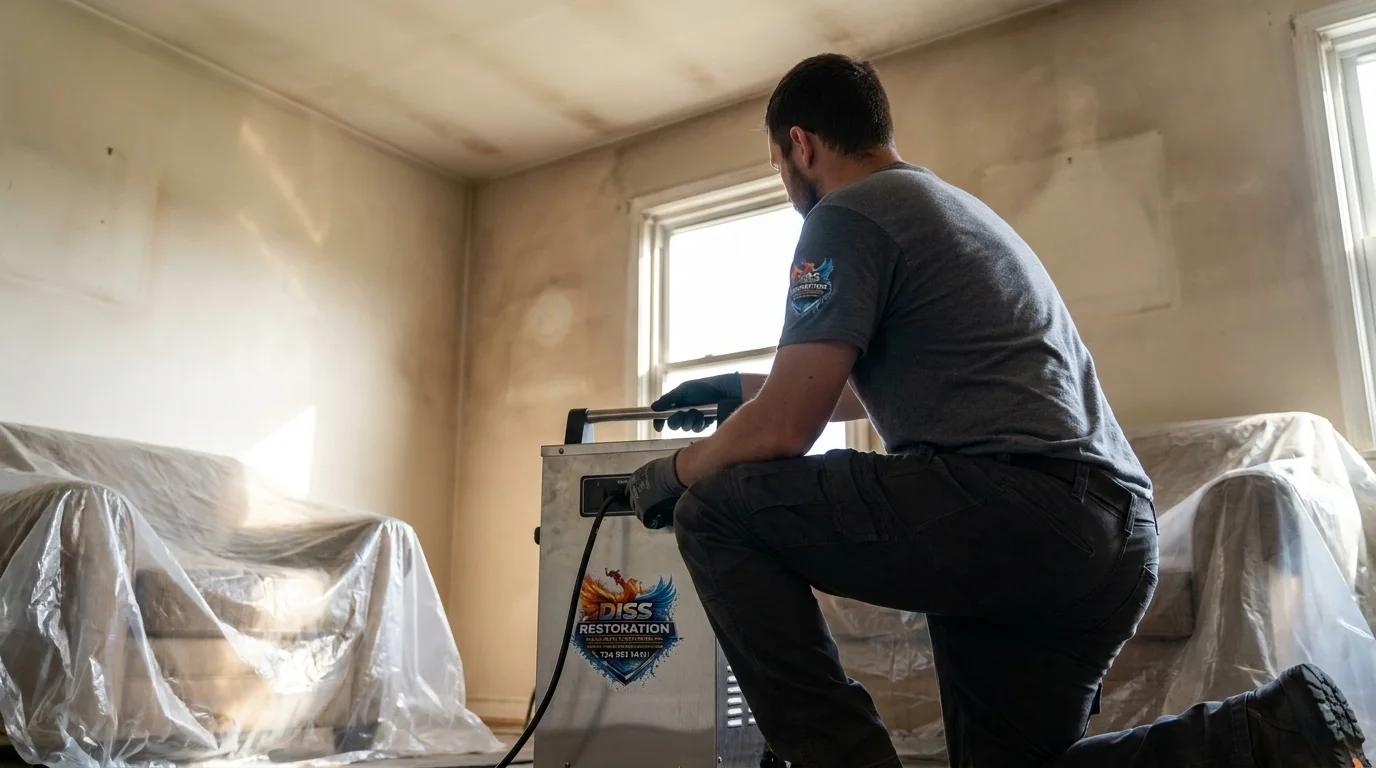
Smoke residue, sewage backups, and dead rodents in a wall cavity all leave behind odor molecules that bond to porous surfaces: drywall, insulation, subflooring, HVAC ductwork. Masking sprays and scented candles cover the smell for a few hours and then it comes back, usually worse, because the source material is still off-gassing. Professional odor elimination works differently. It identifies where the odor-causing residue is actually sitting, physically removes what can be removed, and then uses equipment matched to the chemistry of the problem, ozone for non-occupied spaces, hydroxyl generators for occupied homes, thermal fogging to drive deodorizer into the same microscopic pathways the smoke or contamination traveled through in the first place.
Timelines vary by source. A single room with light smoke odor from a kitchen fire might clear in one to two treatment cycles over a day or two. A whole-house tobacco odor job, or an odor tied to prior water damage and hidden mold growth, can take several days of treatment paired with source removal (cutting out affected drywall, replacing contaminated insulation, sealing subfloor). Odor work is rarely a single visit. It’s diagnostic first, then layered treatment, then a verification step to confirm the smell is actually gone and not just temporarily suppressed.
Our process
- Source identification. We walk the property to pinpoint where odor-causing residue has settled, not just where the smell is strongest, since odor can travel through ductwork and wall cavities far from its origin.
- Material assessment. Porous materials (carpet pad, insulation, untreated wood, drywall) that have absorbed smoke, sewage, or biological odor usually can’t be deodorized in place and need to come out. We document what’s salvageable and what isn’t before touching anything.
- Source removal and cleaning. Charred or contaminated materials are removed. Remaining surfaces are cleaned with products matched to the residue type, protein-based soot cleans differently than synthetic soot, and sewage-contaminated surfaces get an antimicrobial pass.
- Active deodorization treatment. Depending on the space and whether it’s occupied, we deploy ozone generators (vacant spaces only, due to respiratory irritation), hydroxyl generators (safe to run with people or pets present), or thermal fogging, which vaporizes a deodorizing agent so it penetrates the same cracks and fibers the original odor did.
- Verification. We re-check the space, including a final walkthrough with the homeowner, before calling the job complete. If odor persists, that’s a sign a source was missed, not that the equipment needs to run longer.
What separates a good odor removal response from a bad one
The most common mistake is treating odor as a smell problem instead of a material problem. Running an ozone machine in a room with saturated carpet pad or soot-covered insulation still in place will temporarily mask the odor and then it returns within days, because the source was never removed. A good technician identifies source materials first and treats those; a rushed job sprays deodorizer over the top and leaves.
Ozone also gets misused. It’s effective but it oxidizes organic material and can degrade rubber, certain plastics, and some finishes if run too long or in an occupied space. It should never be used around people, pets, or plants, and the space needs to be ventilated afterward before reoccupying. Hydroxyl generators are slower but don’t carry that risk, which matters for a job where residents need to stay in the home.
Insurance adjusters reviewing an odor claim tied to fire or water damage typically want documentation showing what was removed versus treated, and why. A scope that lists “deodorized living room” without specifying what materials were cut out or replaced is a common reason claims get questioned or underpaid.
What does Odor Removal and Deodorization cost?
Costs depend heavily on the odor source, how far it’s traveled into the structure, and whether contaminated materials need to be removed before treatment can work. Every loss is different, which is why DISS Restoration provides a written scope before any work begins rather than a flat estimate over the phone. Homeowners insurance typically covers odor removal when it’s tied to a covered peril, such as a fire or a sudden pipe failure, but it generally does not cover odor from ongoing issues like a pet or long-term smoking, which carriers treat as a maintenance matter.
| Scenario | Typical range |
|---|---|
| Single room, light smoke odor | $300 - $800 |
| Whole-house smoke odor, treatment only | $1,500 - $4,000 |
| Whole-house smoke odor with material removal | $3,500 - $9,000 |
| Sewage or biological odor, single area | $800 - $2,500 |
| Severe or prolonged odor (fire, flood, or long-term tobacco) | $5,000 - $15,000+ |
Seasonal & regional considerations
Youngstown’s humid summers slow odor dissipation and can reactivate smoke odor in homes that were treated incompletely after a fire, since heat and moisture re-release trapped particles from porous surfaces. In winter, closed-up homes with less air exchange tend to trap odors from furnace puff-backs or sewage backups longer than they would in a well-ventilated season, which is part of why source removal matters more than extended run-time on a machine.
Service area
DISS Restoration provides odor removal and deodorization throughout Youngstown and the surrounding Mahoning Valley communities, working in the same housing stock of older masonry and wood-frame homes where odor tends to travel through balloon-frame wall cavities and original ductwork.
If a smell has settled into a room, a basement, or an entire house and isn’t going away on its own, begin professional odor elimination with a diagnostic walkthrough. Call DISS Restoration at (724) 981-1441 to schedule an assessment.
Services We Handle
- Odor Control & Deodorization
- Smoke Odor Removal
Frequently Asked Questions
Does homeowners insurance cover odor removal and deodorization?
What's the difference between ozone treatment and hydroxyl deodorization?
Will deodorizing spray or an air purifier get rid of smoke odor on its own?
How many treatment cycles does thermal fogging usually take?
Can odor come back after a property has been treated?
Looking for the best odor removal and deodorization company in Youngstown?
DISS Restoration provides odor removal and deodorization in Youngstown, OH and the surrounding area, and has served local property owners since 2021. Customers rate us 4.7 out of 5 stars across 63 Google reviews. We answer calls 24/7 — call (724) 981-1441 for immediate help.
Need Odor Removal and Deodorization now?
We respond 24/7 across Youngstown and surrounding OH cities.
Related Coverage
- Our Restoration Services
- Contact DISS Restoration
- Restoration Services in Austintown
- Restoration Services in Boardman
- Restoration Services in Campbell
- Restoration Services in Canfield
- Restoration Services in Farrell
- Restoration Services in Girard
- Restoration Services in Greenville
- Restoration Services in Grove City
- Restoration Services in Hermitage
- Restoration Services in Hubbard
- Restoration Services in Mercer
- Restoration Services in Mineral Ridge