24/7 Emergency Smoke Damage Restoration in Youngstown
24/7 emergency smoke damage restoration in Youngstown and surrounding areas. IICRC-certified, insurance billing accepted. Call (724) 981-1441.
Smoke damage in a Youngstown home or business? Call now for 24/7 emergency service at (724) 981-1441. Smoke residue is acidic, and the longer it sits on drywall, metal, and finished surfaces, the harder and more expensive it becomes to remove.
Smoke behaves differently than the fire itself. Even after flames are out and the structure is deemed safe to re-enter, soot particles keep working, settling into carpet fibers, HVAC ductwork, cabinetry, and wall cavities long after the smoke itself has cleared. A grease fire in a kitchen leaves a different residue than a smoldering electrical fire in a wall void, and wildfire smoke drifting into a home through open windows or a running HVAC system leaves yet another kind of film. Treating all smoke damage the same way is one of the most common mistakes in this industry.
What smoke damage restoration actually involves
Smoke damage restoration starts with identifying what kind of soot is on the surfaces, because that determines the cleaning agents and tools used. Dry smoke from a fast, hot fire (often wood or paper) leaves a powdery residue that’s easier to wipe but tends to migrate into every crevice. Wet smoke from a smoldering, low-oxygen fire (common with foam, plastics, and rubber) leaves a sticky, smeary film that bonds to surfaces and smears if handled with the wrong technique. Protein residue from a kitchen fire is nearly invisible but carries an intense odor that soaks into cabinetry and finishes.
Equipment used depends on the surface and residue type: dry sponges for soot on porous materials like drywall and unpainted wood, solvent-based or alkaline cleaners for greasy film on hard surfaces, HEPA vacuums to lift particulate without grinding it deeper into fibers, and thermal foggers or hydroxyl generators to neutralize odor at a molecular level rather than mask it. Timelines vary with the scope: a single room with surface soot might clear in a day or two, while a structure fire with smoke traveling through HVAC ducts and wall cavities can take one to two weeks between cleaning, odor treatment, and verification.
Our process
- Soot characterization. We identify whether residue is dry, wet, or protein-based, since this dictates cleaning method and chemical selection before any work begins.
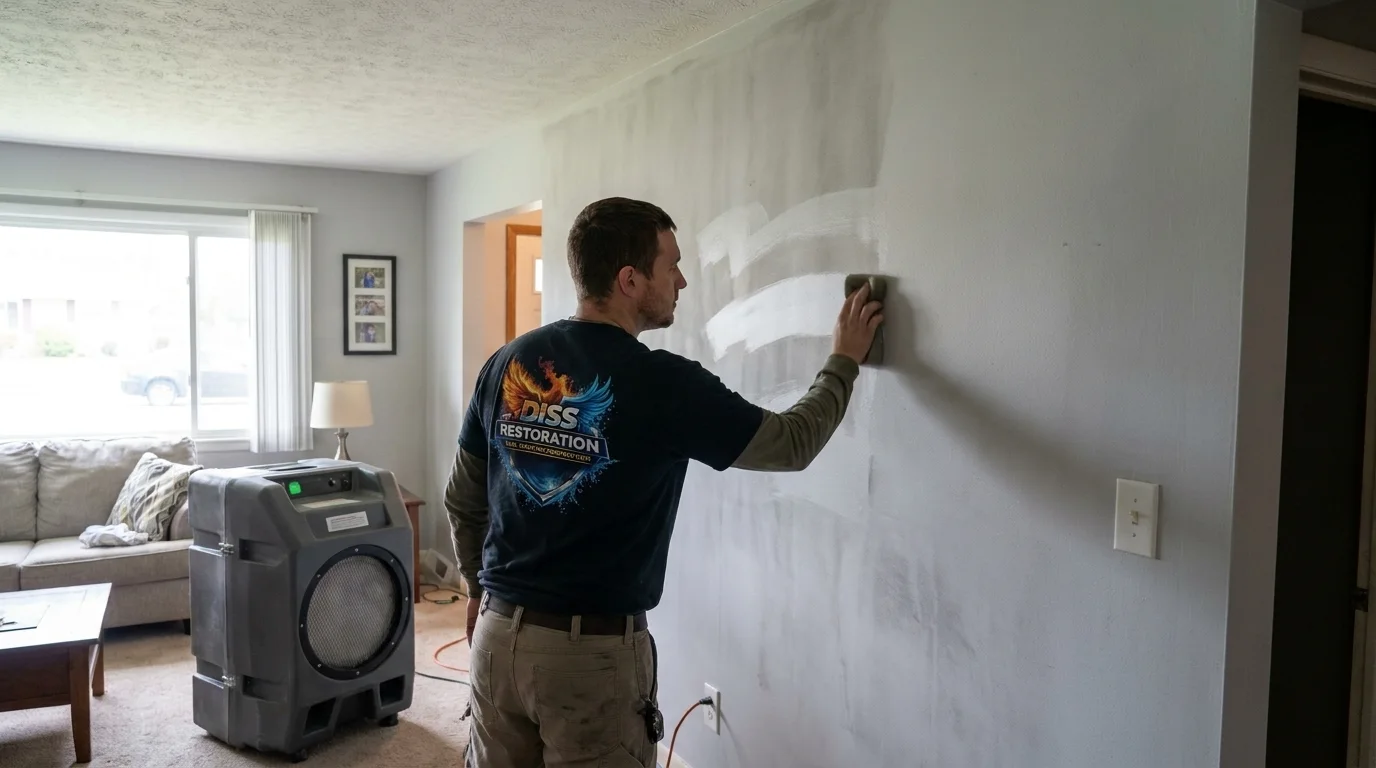
- Pre-cleaning and dry sponge pass. Loose particulate is removed from walls, ceilings, and contents before wet cleaning, which prevents smearing residue deeper into porous materials.
- Wet cleaning and surface treatment. Affected surfaces, trim, and hard contents are cleaned with agents matched to the soot type, then sealed or primed where staining has penetrated finishes.
- Thermal fogging or ozone/hydroxyl treatment. Odor-causing particles that have bonded to surfaces and settled into soft materials are neutralized rather than covered with fragrance.
- HVAC and duct inspection. Smoke traveling through return air ducts can redistribute odor and soot throughout a structure for months if ductwork isn’t cleaned or sealed as part of the scope.
What separates a good smoke damage response from a bad one
The most common mistake is treating smoke odor with air fresheners or ozone alone without first removing the residue that’s causing it. Odor won’t fully resolve until the particulate source is cleaned, because ozone and hydroxyl treatments work on airborne and surface-level molecules, not on soot sitting inside carpet pad or behind baseboards.
Another frequent miss is skipping metal surfaces. Acidic soot residue corrodes hinges, electrical contacts, and appliance components within days if untreated, which is why a thorough response includes neutralizing metal fixtures even when they look unaffected. Insurance adjusters also look closely at whether HVAC systems were inspected and cleaned, since smoke circulated through ductwork is a common source of recurring odor complaints after a claim has already closed. A written scope that documents soot type, affected materials, and odor source locations before work starts gives both the homeowner and the carrier a clear record of what was found and what was done.
What does smoke damage restoration cost?
Costs vary widely based on the size of the affected area, the type of soot, whether HVAC ductwork is involved, and whether odor has penetrated soft materials like carpet and upholstery versus hard surfaces only. Every loss is different, and DISS Restoration provides a written scope of work before any cleaning begins so you know what’s included and why. Homeowners insurance typically covers smoke damage restoration when the fire itself is a covered peril, though coverage for odor-only claims (such as nearby wildfire smoke with no direct fire damage) depends on the policy.
| Scenario | Typical range |
|---|---|
| Single room, light surface soot | $500 - $1,800 |
| Whole-room deep clean with odor treatment | $1,800 - $4,500 |
| Multi-room smoke and soot cleanup | $4,500 - $12,000 |
| HVAC duct cleaning after fire | $450 - $1,500 |
| Whole-structure smoke remediation | $10,000 - $30,000+ |
Seasonal & regional considerations
Youngstown’s winter heating season brings a spike in furnace malfunctions and chimney-related smoke incidents, and closed-up homes during cold months tend to trap smoke odor longer since windows stay shut and fresh air exchange is limited. In warmer months, open windows during regional wildfire smoke events can pull particulate into HVAC systems and soft furnishings even without a fire on the property itself, which is a different kind of claim than a structure fire but requires similar residue and odor treatment.
Service area
DISS Restoration provides smoke damage restoration services throughout Youngstown and the surrounding Mahoning Valley communities, working in the mix of older masonry homes, mid-century ranches, and newer construction common to the area, each of which traps and holds smoke residue differently depending on wall cavity design and HVAC layout.
If smoke has settled into your home or business, don’t wait for the odor to fade on its own, because it usually won’t. Call DISS Restoration at (724) 981-1441 to begin smoke and soot removal with a documented, scope-driven process from the start.
Services We Handle
- Smoke & Soot Removal
- Soot Removal
Frequently Asked Questions
Does homeowners insurance cover smoke damage restoration?
What's the difference between protein soot and synthetic soot, and why does cleanup vary?
Can smoke odor come back after cleaning if the HVAC system isn't addressed?
How long does post-fire smoke cleanup typically take?
Is wildfire smoke cleanup different from cleanup after a structure fire?
Looking for the best smoke-damage-restoration company in Youngstown?
DISS Restoration provides smoke-damage-restoration in Youngstown, OH and the surrounding area, and has served local property owners since 2021. Customers rate us 4.7 out of 5 stars across 63 Google reviews. We answer calls 24/7 — call (724) 981-1441 for immediate help.
Need smoke-damage-restoration now?
We respond 24/7 across Youngstown and surrounding OH cities.
Related Coverage
- Our Restoration Services
- Contact DISS Restoration
- Restoration Services in Austintown
- Restoration Services in Boardman
- Restoration Services in Campbell
- Restoration Services in Canfield
- Restoration Services in Farrell
- Restoration Services in Girard
- Restoration Services in Greenville
- Restoration Services in Grove City
- Restoration Services in Hermitage
- Restoration Services in Hubbard
- Restoration Services in Mercer
- Restoration Services in Mineral Ridge
- The Fire Damage Restoration Process, Explained