Upholstery Cleaning in Youngstown
24/7 upholstery cleaning in Youngstown and surrounding areas. IICRC-certified, insurance billing accepted. Call (724) 981-1441.
A couch that still smells faintly of smoke a year after a kitchen fire, a sectional with a dark ring where a spilled drink soaked into the cushion foam, an armchair that’s been sneezed on by three generations of cats: upholstery holds onto what a wipe-down can’t reach. Surface cleaning moves dirt around the fibers. Getting it out of the padding, the piping, and the frame joints where odor and allergens actually live takes the right method for the specific fabric, and the wrong method can shrink a cushion cover or leave a permanent water ring.
What Upholstery Cleaning actually involves
Every piece of furniture carries a manufacturer tag code, W, S, WS, or X, that tells a cleaner what it can safely tolerate. A silk-blend accent chair (S) reacts to water-based cleaning with shrinkage or permanent spotting. A cotton-poly sofa (W or WS) can usually take hot water extraction without issue. Leather is its own category entirely, cleaned and conditioned rather than steamed. Reading that tag, and confirming it with a hidden-area test, is the difference between a clean piece of furniture and a damaged one.
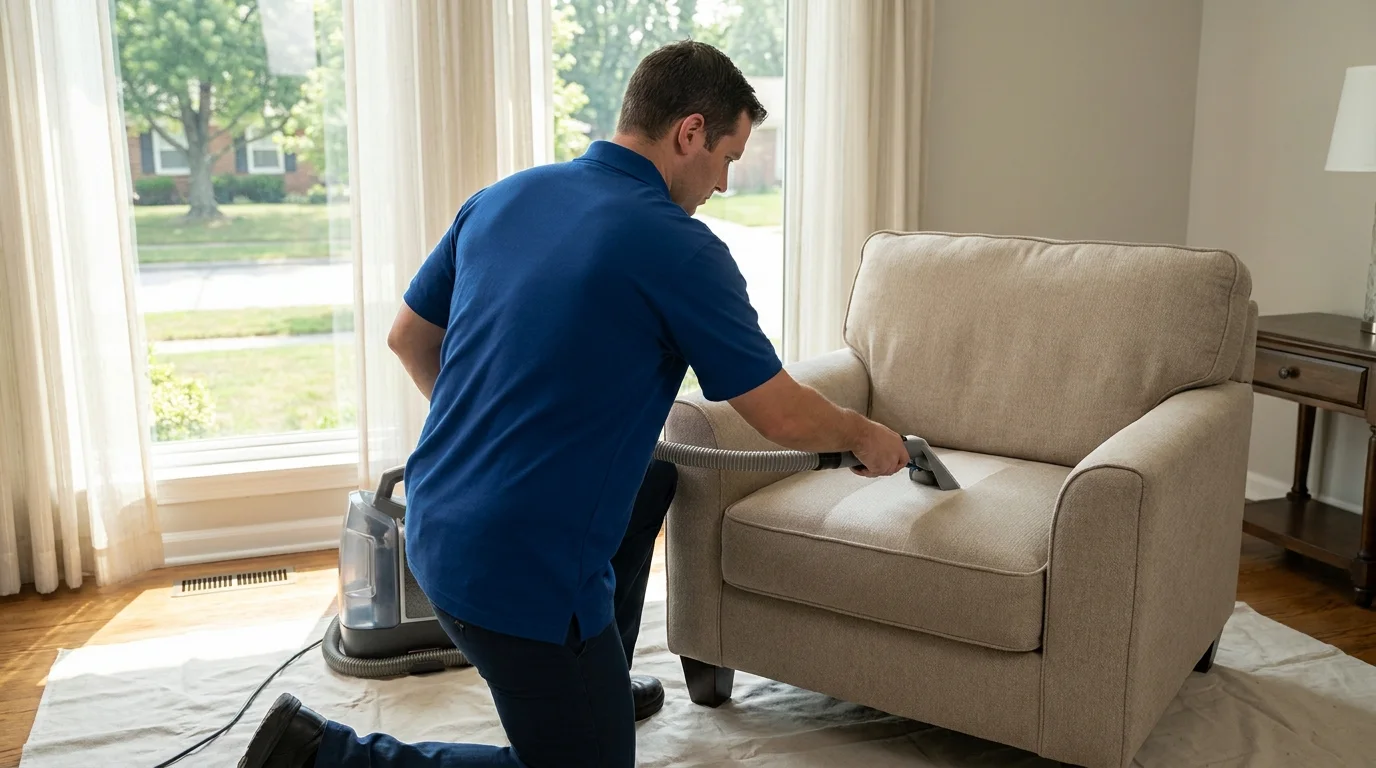
Most jobs run one to three hours depending on the number and size of pieces. A standard three-cushion sofa typically dries within four to eight hours with proper airflow; heavier fill or a humid house can push that longer. The goal on every piece is to get moisture and agitation deep enough to lift what’s embedded in the cushion foam and frame padding, without saturating it to the point that it can’t dry from the inside out.
Our process
- Fabric identification and testing. We check the manufacturer tag code and run a dye-bleed test on a hidden seam or cushion underside before any cleaning solution touches visible fabric.
- Pre-treatment. Cushions and crevices get vacuumed first to pull out grit that would otherwise turn into mud once wet. Protein stains, pet accidents, and ground-in soil get spot-treated before the main clean.
- Method-matched cleaning. W and WS-coded fabrics typically get hot water extraction. S-coded fabrics get a low-moisture or solvent-based approach. Leather gets a pH-balanced cleaner followed by conditioning to keep the hide from drying and cracking.
- Extraction and controlled drying. We pull as much moisture back out as we put in, then set up airflow so the cushion core dries evenly instead of staying damp in the middle while the surface feels dry.
- Final inspection. We check seams, piping, and welt cord for any remaining spotting and confirm the piece is dry enough to use before we consider the job done.
What separates a good upholstery cleaning response from a bad one
The most common mistake is skipping the tag code and dye test and running hot water extraction on a fabric that can’t handle it, which shows up later as a ring, a shrunk cushion cover, or a permanently darkened patch that wasn’t there before cleaning. The second most common mistake is over-wetting: pushing so much moisture into a cushion that it can’t dry from the center out, which leaves a musty smell that comes back within a week and, in worse cases, lets mildew take hold inside the foam where nobody can see it.
A careful operator also pays attention to what’s under and around the fabric: wood trim and legs that can water-stain if overspray isn’t controlled, metal frame components that can rust if drying airflow isn’t set up correctly, and older or antique pieces with horsehair or cotton batting stuffing that behaves very differently from modern polyurethane foam. If a loss happened alongside a larger water or fire event, documenting which pieces were cleaned versus which were too damaged to save matters for the insurance file.
What does Upholstery Cleaning cost?
Industry-typical pricing for upholstery cleaning depends on the piece, the fabric type, and how much pre-treatment a stain or odor needs. Every job is different, and DISS Restoration provides a written scope before any cleaning begins so there are no surprises. Homeowners insurance generally does not cover routine upholstery cleaning, but if furniture was affected by a covered water or fire loss, cleaning or replacement of those contents is often part of the claim.
| Scenario | Typical range |
|---|---|
| Single accent chair, standard fabric | $60 - $120 |
| Sofa, 3-cushion, standard fabric | $150 - $300 |
| Sectional sofa | $250 - $500 |
| Leather sofa, cleaning and conditioning | $200 - $400 |
| Dining chairs, per seat | $20 - $45 |
| Pet stain or odor treatment add-on | $40 - $100 |
Seasonal & regional considerations
Youngstown’s humid summers slow drying time on heavier sofas and sectionals, so we plan airflow accordingly during warmer months to avoid trapping moisture in the cushion core. Winters here bring dry forced-air heat that pulls moisture out of leather furniture, which is when cracking and stiffening tend to show up, making conditioning a more useful step in the colder months than in summer.
Service area
DISS Restoration cleans upholstery for homeowners and property managers throughout Youngstown and the surrounding communities, including homes with older furniture pieces common to this region’s housing stock.
If a sofa, chair, or sectional is holding onto a smell, a stain, or a spill that won’t lift with a home vacuum, call DISS Restoration at (724) 981-1441 to schedule fabric-appropriate upholstery cleaning.
Frequently Asked Questions
Does homeowners insurance cover upholstery cleaning?
What do the W, S, and WS tags on furniture actually mean?
Can leather furniture be steam cleaned the same way as fabric?
How long does a sofa take to dry after cleaning?
Can you get pet odor and stains out of a couch, or is the cushion foam too far gone?
Looking for the best upholstery cleaning company in Youngstown?
DISS Restoration provides upholstery cleaning in Youngstown, OH and the surrounding area, and has served local property owners since 2021. Customers rate us 4.7 out of 5 stars across 63 Google reviews. We answer calls 24/7 — call (724) 981-1441 for immediate help.
Need Upholstery Cleaning now?
We respond 24/7 across Youngstown and surrounding OH cities.
Related Coverage
- Our Restoration Services
- Contact DISS Restoration
- Upholstery Cleaning in Austintown
- Upholstery Cleaning in Boardman
- Upholstery Cleaning in Campbell
- Upholstery Cleaning in Canfield
- Upholstery Cleaning in Farrell
- Upholstery Cleaning in Girard
- Upholstery Cleaning in Greenville
- Upholstery Cleaning in Grove City
- Upholstery Cleaning in Hermitage
- Upholstery Cleaning in Hubbard
- Upholstery Cleaning in Mercer
- Upholstery Cleaning in Mineral Ridge