TL;DR: A remodel after restoration damage means rebuilding the affected space, not just drying or cleaning it, and it typically covers new drywall, flooring, cabinetry, paint, and sometimes a layout change. Insurance usually covers restoring the space to its pre-loss condition; anything beyond that (upgraded finishes, a reconfigured kitchen) is an out-of-pocket or allowance decision you make with your contractor before demo starts.
If you just got the all-clear from a restoration crew (the water’s extracted, the smoke odor’s gone, or the mold containment came down) you’re now staring at exposed studs, missing cabinets, or a kitchen that’s down to subfloor. That’s the moment most homeowners realize restoration and remodeling are two different jobs with two different scopes, and that the company who dried out your basement isn’t automatically the one who should frame it back in. Here’s how that handoff actually works, what it costs, and what questions keep you from getting burned on the rebuild.
When Does a Restoration Job Turn Into a Remodel?
A restoration job becomes a remodel the moment demolition exceeds what’s needed to stop damage and dry the structure. Mitigation removes wet drywall, soaked insulation, and charred materials. A remodel replaces them, and often upgrades them in the process.
In practice, that line shows up fast. A burst pipe in a Struthers bungalow near the Mahoning River might only need two sheets of drywall replaced and a coat of paint. A kitchen fire that took out cabinets, countertops, and flooring is a full remodel, even though the insurance claim started as a fire loss. The older housing stock common in the Mahoning Valley, plaster walls, original hardwood, galvanized plumbing, also tends to push jobs from “repair” into “rebuild” territory once a contractor opens the walls and finds out what’s actually behind them.
Should You Use the Same Company for Restoration and the Remodel?
Using one company for both phases usually means fewer handoffs, faster scheduling, and one point of accountability for the whole job from mitigation through final paint. It also avoids the finger-pointing that happens when a drying company and a separate contractor disagree about what’s actually dry enough to rebuild on.
The tradeoff is worth naming honestly: not every restoration company does its own reconstruction well, and not every general contractor understands moisture readings, IICRC drying standards, or how an insurance adjuster scopes a loss. DISS Restoration handles both sides under one roof through its general contracting and water damage restoration teams, which matters most when the same wall that got dried out also needs to get framed, rocked, and painted back. Ask any contractor bidding your rebuild whether they did the drying themselves or are rebuilding on someone else’s sign-off, and get that sign-off in writing either way.
What Does a Post-Restoration Remodel Actually Involve?
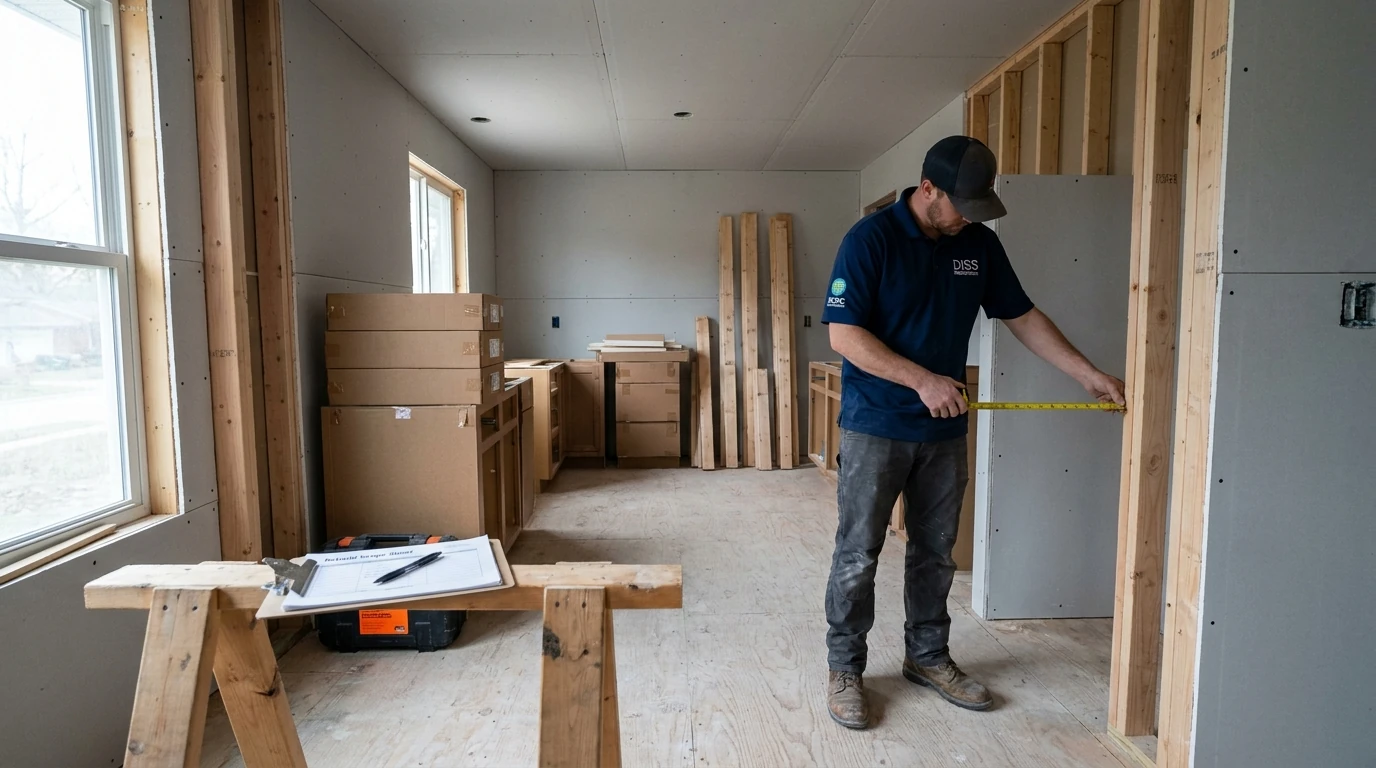
A post-restoration remodel runs through four predictable phases: structural repair (framing, subfloor, drywall), rough-in (electrical, plumbing, HVAC if those were affected), finish work (flooring, cabinets, paint, trim), and a final walkthrough against the written scope.
For a typical single-room loss, that looks like:
- Demo and disposal of anything the restoration team flagged as non-salvageable
- Framing and subfloor repair where studs, joists, or sheathing took damage
- Drywall and insulation replacement, matched to existing texture where it’s visible
- Rough-in inspections for any electrical or plumbing that ran through the damaged area
- Flooring, cabinetry, and trim installed to match or intentionally upgrade the original
- Paint and final punch list, walked room by room against the signed scope
Older homes around Struthers and the surrounding Mahoning Valley often add a step here: if the home was built before 1978, lead-based paint disturbance during demo falls under EPA renovation rules, which is part of why having an EPA Lead-Safe certified crew on the rebuild side isn’t just a nice-to-have, it’s a compliance requirement on older plaster-and-lath homes.
What Should You Watch Out for When Scoping a Remodel After Damage?
The biggest risk in a post-damage remodel is an unwritten scope, where “we’ll match what was there” turns into arguments about tile selection or cabinet grade three weeks into the job. Get the materials, finishes, and allowance amounts in writing before demo, not after.
Watch for a few specific traps. First, insurance pays to restore the home to its pre-loss condition, using comparable materials, not to upgrade it. If you want better flooring, nicer countertops, or a reconfigured layout, that’s an allowance conversation separate from the claim, and a reputable contractor will tell you which dollars come from which source. Second, confirm the drywall, insulation, and subfloor were actually dry before cover-up. Framing over damp wood is how homeowners end up with a second mold problem eighteen months later, which is exactly the kind of issue covered in our burst pipe emergency checklist. Third, get the permit situation straight. Electrical and plumbing rough-in almost always needs a local inspection before drywall goes back up, and skipping that step creates problems at resale.
How Do You Get Started on a Remodel After Restoration?
Start with a written scope that separates insurance-covered repairs from any upgrades you want, signed before demo begins. That document is what protects you if a dispute comes up later, with the contractor or the adjuster.
If your mitigation work is already done and you’re staring at an open wall or a bare subfloor, the next move is a walkthrough with a contractor who can read the restoration paperwork and turn it into a rebuild scope. Request a written estimate that itemizes materials, and ask directly what’s claim-funded versus what’s an out-of-pocket allowance.
A remodel after damage is also a reasonable moment to fix the thing that bothered you about the space before the loss ever happened, a bad layout, outdated cabinets, flooring you never liked. It’s the one silver lining in an otherwise unwanted project, and DISS Restoration’s general contracting team scopes that upgrade conversation separately from the insurance-covered repair, so you know exactly what you’re paying for either way.
A remodel after restoration doesn’t have to mean a second set of strangers walking through your house. When the same team handles the drying, the demo, and the rebuild, the handoffs disappear and so does most of the guesswork.
About DISS Restoration
DISS Restoration is an IICRC Certified Firm serving Youngstown, OH and the surrounding Mahoning and Shenango Valleys since 2021, licensed and insured for restoration and general contracting work. Its crews handle water, fire, storm, mold, and contents losses through full reconstruction, including the general contracting work that turns a dried-out structure back into a finished room.